
The Rs 38-trillion mutual fund (MF) industry is going through a new fund offer (NFO) rush. Since July 1, the industry has launched close to 70 NFOs. This follows the completion of a near three-month embargo period when the industry had vowed to not launch any new offerings till the time it implemented norms around pooling of investor accounts. As a result, between April and June 2022, the industry was able to launch just three NFOs.


State Bank of India on Monday invited bids from strategic as well as financial bidders for stake sale in ailing Jet Airways, and the bids have to be submitted by April 10, said a public notice.

Budget this year has allowed PSBs to bring down govt stake to 51%

'Isn't it obvious? Do you have a doubt? There is so much data that shows that there is quid pro quo.' 'There are many instances of donations being given after the raids, donations being given before the award of a contract and many other permutations and combinations.'

Most large fund houses, such as HDFC MF, ICICI Prudential AMC, Reliance MF, Reliance MF, Birla SunLife MF and SBI MF, have the backing of large banks or financial institutions, giving them reach and understanding, they say.

Do you have financial planning queries? Ask rediffGURU Anil Rego.

The interim funding has not been forthcoming thus far, and as a result Jet has extended cancellation of international operations until April 18.

Pre-initial public offering (IPO) allotments have lost favour amid buoyancy in the market and increase in average float size this year. After hitting a record high in 2023, they have come to a halt, with just three companies opting for such placements totalling Rs 235 crore. This compares to eight deals worth Rs 648 crore during the same period of the previous year.
SMCF aims to invest in scrips and sectors that are currently out-of-fashion, but hold potential

The IL&FS management is also talking to its second-largest shareholder, Orix Corporation of Japan, to infuse more funds into the company - in case any shareholder backs out during the rights issue.

The SIP route suits the salaried class, by matching their income flows with investment frequency.

The ED case follows the police complaint for alleged criminal conspiracy and defrauding investors.

Omkeshwar Singh, head, Rank MF, a mutual fund investment platform, answers your queries.

The time is ripe for a merger of eight fund houses indirectly owned and controlled by the central government, says N Sundaresha Subramanian.

rediffGURU Kirtan A Shah answers your personal finance queries.

rediffGURU Ramalingam Kalirajan answers your personal finance queries.

Asia's richest man Mukesh Ambani drew nil salary from his oil-to-telecom-and-retail conglomerate Reliance Industries for the fourth straight year in a row while his children earned a sitting fee and a commission for being on the board of India's most valuable company. Ambani, 67, had capped his annual remuneration at Rs 15 crore from financial year 2008-09 (April 2008 to March 2009) to 2019-20 (FY20); and since FY21, he opted to forego his salary, due to COVID-19 pandemic, until the company and all its businesses were fully back to their earnings potential.

The number of applications has nearly doubled in the home and auto loan segments after the recent reduction in interest rates in these segments.
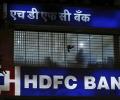
HDFC Bank's latest shareholding data showed that the room for foreign investment has fallen just 5 basis points short of the threshold set by Morgan Stanley Capital International (MSCI) to fully include the stock in its indices. Currently, the index provider has applied an adjustment factor of 0.5 since the foreign room is less than 25 per cent. Removal of the adjustment factor will result in inflows of a massive $4.8 billion (Rs 40,000 crore) into HDFC Bank, according to Brian Freitas, a New Zealand-based analyst with Periscope Analytics.

SBI managing director PK Gupta told reporters that the rupee has been faring better than many of its peers, including the Turkish, Argentinean, and Indonesian currencies.

The central bank is engaged with other financial institutions for investment as part of the scheme to resurrect Yes Bank under RBI imposed moratorium since March 5.

SBI and other public sector banks have decided to lend Rs 4,000 crore to Patanjali Ayurved for the acquisition of Ruchi Soya, which was facing bankruptcy proceedings under the Insolvency and Bankruptcy Code. The money lent by banks will help the PSBs to settle their exposure to Ruchi Soya with a haircut of 65 per cent. Banks led by SBI and others had earlier made claims of over Rs 12,146 crore against Ruchi Soya after the company failed to repay its loans.

According to SBI executives, the aim is to do things efficiently with an eye on profitability, and get a feedback on areas, including which business to enter and which to exit.

MFs have benefited from a shift to financial assets from physical assets like real estate and gold.

Asset managers are betting big on ETFs these days.

State-run lenders will take a lead in creation of the bad bank, but the sick asset resolution platform needs the support of private banks and other lenders to be successful, State Bank of India managing director Swaminathan J said on Thursday. If all lenders come on board, the National Asset Reconstruction Company (NARC) announced in the budget will be able to aggregate 100 per cent of a sick company's outstanding loans, which shall ultimately lead to better resolution of the asset quality stress for all. The government is yet to announce the specific contours of the NARC or the bad bank and has also only said that it is willing to provide some sovereign guarantee to help the platform.

In an effort to grab a share of the hefty Diwali bonus to employees in government and corporate sector, country's largest lender State Bank of India may raise the interest rate on term deposit rates in next few days.

PCR is the ratio of provisioning to gross non-performing assets and indicates the extent of funds a bank has kept aside to cover loan losses. In December 2009, RBI had told all banks to maintain a PCR of at least 70 per cent by September 2010, to enhance their soundness.

'They have since only tried to improve systems. Also, with regulatory guidance from time to time, we are in a position to assess a situation and react in time.'

When billionaire Warren Buffet started his first fund in 1956 with eleven investors, he invested a token amount of $100 of his own money as "skin in the game". Buffet denies it but he is credited with coming up with the term describing those running a fund risk some of their own money in it. The mutual fund (MF) industry has more than Rs 81,200 crore riding on its schemes, shows a Business Standard analysis of data on sponsor and associate contributions from the Association of Mutual Funds in India (Amfi).

'It could tempt investors to pick stocks that are not fundamentally sound.'

Balanced funds may be a good option for first-time investors.

The National Company Law Tribunal (NCLT) on Monday gave its approval to Jio for the acquisition of Reliance Infratel (RITL). The tribunal asked Jio to deposit Rs 3,720 crore in the State Bank of India (SBI) escrow account to complete the acquisition of RCOM's tower and fibre assets. On November 6, Jio had proposed to deposit Rs 3,720 crore in an escrow account to complete the acquisition of Reliance Infratel which is undergoing an insolvency resolution process.

Money managers have turned cautious about the technology space.

Investors who issued units in liquid and overnight funds, as well as those with a short-term holding of less than 30 days, are likely to be impacted the most, say experts.

Investors' wealth tumbled over Rs 5.78 lakh crore in two days of market fall amid a weak trend in global markets after a host of central banks hiked interest rates and gave hawkish commentary. The 30-share BSE Sensex declined 461.22 points or 0.75 per cent to settle at 61,337.81 on Friday. In the previous trade, the BSE benchmark had tanked 878.88 points or 1.40 per cent to settle at 61,799.03.

SBI offers reward points for various types of banking transactions.

The key assets put on the block include its entire stake in Reliance General Insurance Company, the third-largest private sector insurer, and a 49 per cent stake in Reliance Nippon Life Insurance, a joint venture with Nippon Life, which is among the top five private-sector insurance companies.
